
Chicken Mac and Cheese is the kind of dinner I make when I want something extra comforting but still need a little protein on the plate. Tender pieces of seasoned chicken are mixed with creamy macaroni and a rich cheese sauce, so every bite has that familiar mac and cheese comfort with something more substantial.
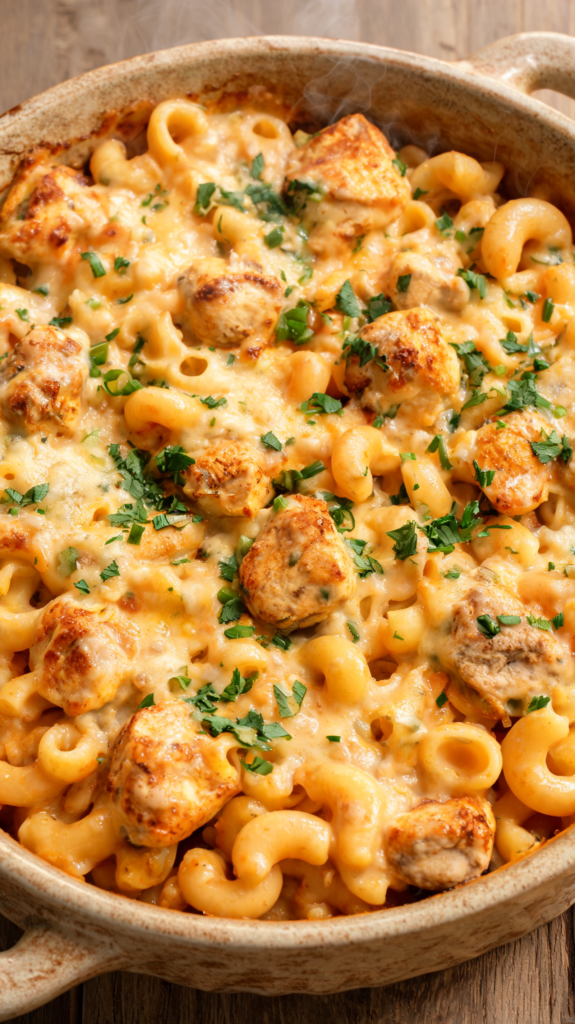
I like browning the chicken first because those golden edges add a lot of flavor. Then I use the same skillet to bring the sauce together, which means the cheese sauce picks up some of that savory chicken flavor.
The sauce is smooth, creamy, and cheesy without needing a long list of cheeses. Cheddar gives it that classic mac and cheese taste, while a little mozzarella helps make it extra creamy.
This is also a good recipe for using leftover chicken. If you already have cooked chicken in the refrigerator, you can skip the chicken cooking step and have dinner ready even faster.
Why You Will Love This Recipe
This recipe combines juicy chicken, tender macaroni, and a creamy cheddar cheese sauce in one satisfying meal. It is simple enough for a weeknight but still feels like something you can serve when everyone wants a cozy dinner.
The chicken is seasoned lightly so it does not overpower the cheese sauce. I also like using two cheeses rather than adding five or six different varieties. You get plenty of flavor and a smooth texture without making the recipe complicated.
Another nice thing about homemade mac and cheese is that you can control the consistency. If you like it extra creamy, add a splash of milk before serving. If you prefer a thicker, scoopable mac and cheese, let it sit for a few minutes after cooking.
Ingredients for Chicken Mac and Cheese
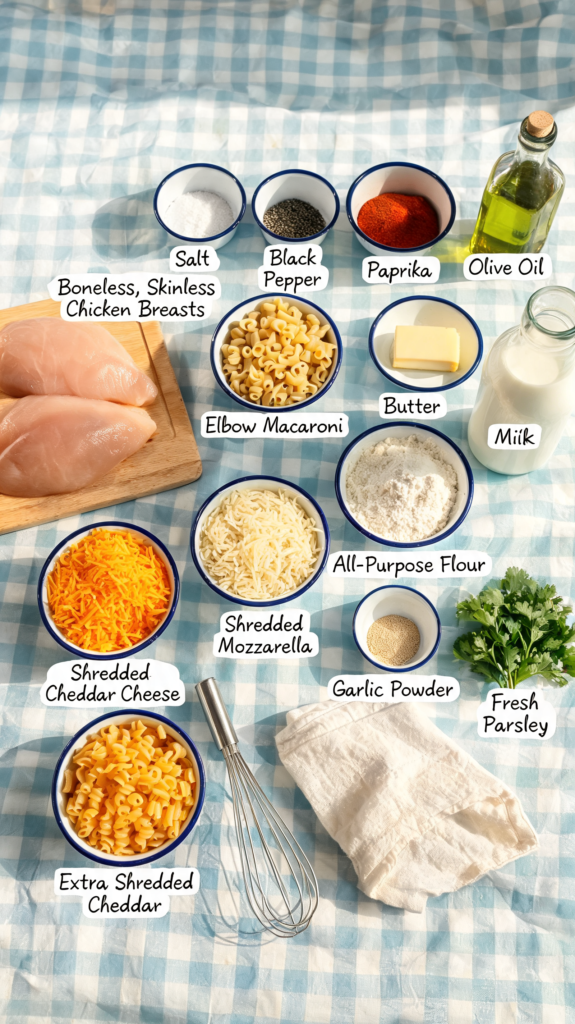
For the Chicken
- 2 boneless, skinless chicken breasts: Two breasts give you plenty of chicken without making the mac and cheese feel overloaded. Cut them into small bite-sized pieces so they cook quickly and mix easily with the pasta.
- 1/2 teaspoon salt: Seasons the chicken and brings out its flavor.
- 1/4 teaspoon black pepper: Adds a little peppery flavor that balances the rich cheese sauce.
- 1/2 teaspoon paprika: Gives the chicken a mild smoky-sweet flavor and helps it develop a nice golden color.
- 1 tablespoon olive oil: Helps brown the chicken in the skillet and keeps the pieces from sticking.
For the Mac and Cheese
- 8 ounces elbow macaroni: Elbow macaroni is the classic choice and its shape holds plenty of creamy cheese sauce. You can use another short pasta if that is what you have.
- 2 tablespoons butter: Forms the rich base for the cheese sauce and helps cook the flour.
- 2 tablespoons all-purpose flour: Thickens the milk into a smooth sauce so the cheese can melt into it without becoming watery.
- 2 cups milk: Creates the creamy base of the sauce. Whole milk gives the richest texture, but 2% also works.
- 1 cup shredded cheddar cheese: Provides the classic sharp, savory mac and cheese flavor.
- 1/2 cup shredded mozzarella: Adds extra creaminess and helps create a smooth, stretchy cheese sauce.
- 1/2 teaspoon garlic powder: Adds a little savory depth without overpowering the cheese.
- 1/4 teaspoon paprika: Gives the sauce a subtle warmth and a little extra color.
- 1/4 teaspoon black pepper: Adds mild seasoning to the creamy sauce.
- 1/4 teaspoon salt: Seasons the sauce, but adjust carefully because the cheese already contains salt.
For Finishing
- 2 tablespoons chopped fresh parsley: Adds a fresh flavor and a little color against the creamy pasta. It is optional but makes the finished dish look brighter.
- Extra shredded cheddar: Optional for sprinkling over the top if you want an even cheesier finish.
How to Make Chicken Mac and Cheese
- Cook the macaroni: Bring a large pot of salted water to a boil and cook the elbow macaroni according to the package directions until just tender. Try not to overcook it because the pasta will continue to soften slightly when it is mixed with the hot cheese sauce. Drain the pasta well and set it aside.
- Season the chicken: Cut the chicken breasts into small, even pieces and place them in a bowl. Add the salt, black pepper, and paprika, then toss everything together until the chicken is evenly coated. Keeping the pieces similar in size helps them cook at the same rate.
- Brown the chicken: Heat the olive oil in a large skillet over medium-high heat. Add the seasoned chicken in a single layer and cook for about 5 to 7 minutes, stirring occasionally, until the pieces are golden on the outside and completely cooked through. Remove the chicken from the skillet and place it on a plate while you prepare the cheese sauce.
- Make the butter base: Reduce the skillet heat to medium and add the butter. Let it melt completely, then sprinkle in the flour. Whisk or stir continuously for about 1 minute so the flour cooks into the butter and forms a smooth mixture. This step helps prevent the finished sauce from having a raw flour taste.
- Add the milk: Slowly pour the milk into the skillet while whisking constantly. Adding it gradually helps prevent lumps and gives you a smoother sauce. Continue stirring for about 3 to 5 minutes, until the milk mixture becomes slightly thickened and coats the back of a spoon.
- Season the sauce: Stir in the garlic powder, paprika, black pepper, and salt. Mix well and keep the heat at medium-low. The sauce should be gently simmering rather than boiling because very high heat can cause the dairy to become grainy.
- Melt in the cheese: Add the shredded cheddar and mozzarella a handful at a time, stirring after each addition until it melts before adding more. Continue stirring until the sauce is smooth, creamy, and completely melted. If the sauce seems too thick, add a small splash of milk to loosen it.
- Combine the pasta: Add the drained macaroni to the cheese sauce and stir gently until every piece of pasta is coated. Take your time with this step because you want the cheese sauce distributed throughout the pasta rather than sitting mostly on top.
- Add the chicken: Return the cooked chicken to the skillet and stir it through the mac and cheese. Let everything cook together over low heat for about 1 to 2 minutes so the chicken warms through and the flavors come together.
- Check the consistency: Turn off the heat and let the mac and cheese sit for about 2 minutes. The sauce will thicken slightly as it rests. If it becomes thicker than you like, stir in a tablespoon or two of warm milk until it reaches the consistency you prefer.
- Finish with parsley: Sprinkle the chopped fresh parsley over the top and gently stir it through. If you want more cheese, add a little extra shredded cheddar while the pasta is still hot so it melts over the surface.
- Serve warm: Spoon the chicken mac and cheese into bowls while it is still creamy and hot. Serve immediately for the smoothest sauce and best texture.
What to Serve Chicken Mac and Cheese With
Chicken mac and cheese is already a filling meal, so I like pairing it with something fresh or green. Roasted broccoli is an easy choice because the slightly crisp edges and mild flavor balance the creamy pasta.
You can also serve it with green beans, roasted asparagus, or a simple garden salad. A light vinaigrette works especially well because the acidity helps cut through the richness of the cheese sauce.
If you are making this for a bigger family dinner, warm dinner rolls are another simple addition. They are especially good for scooping up any cheese sauce left in the bowl.
How to Store and Reheat Chicken Mac and Cheese
Let the mac and cheese cool before transferring it to an airtight container. Store it in the refrigerator for up to 3 to 4 days. The pasta will absorb some of the sauce as it sits, so leftovers will naturally be thicker than the freshly made version.
For the best reheating texture, place the mac and cheese in a skillet over medium-low heat and add a splash of milk. Stir gently as it warms, adding another small splash of milk if the sauce seems dry. Heat slowly until the chicken and pasta are completely hot.
You can also reheat individual portions in the microwave. Add a little milk before heating and warm in short intervals, stirring between each one. Avoid overheating it because high heat can make the cheese sauce oily or cause it to separate.
Leave a Reply